
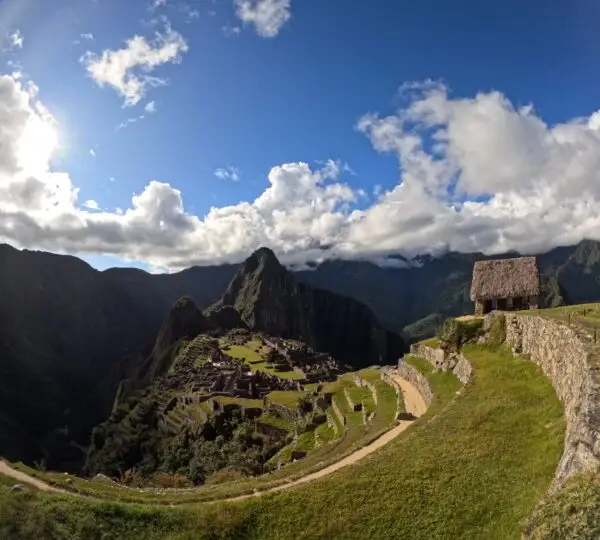

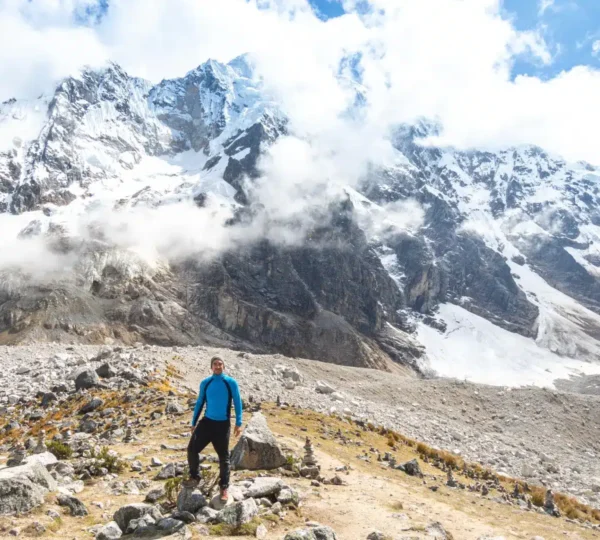

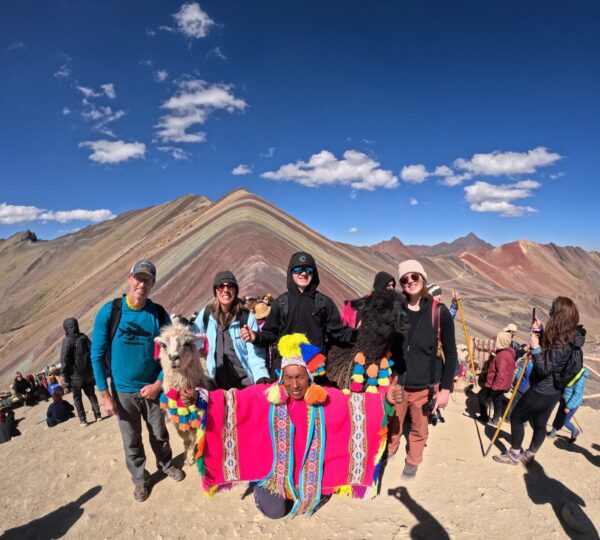


Every year, thousands of travelers arrive in Cusco with a dream: to walk the ancient stone paths of the Inca Trail and arrive at Machu Picchu on foot, the way it was always meant to be experienced.
And every year, a smaller number of those travelers make a decision that puts everything at risk: they try to do it alone.
This blog is not written to scare you. It is written to give you the honest, complete picture that most travel websites won’t, because at Peru Hikers, we believe the best adventures are the ones you come home from safely.
First, Is Solo Hiking the Inca Trail Even Legal?
Let’s start with the fact that most travelers don’t know before they book.
Solo, unguided hiking on the Classic Inca Trail is not permitted by Peruvian law.
According to the Ministerio de Cultura del Perú, the government authority that manages all access to the Inca Trail and Machu Picchu, every trekker on the Classic Inca Trail must be accompanied by a licensed tour operator and a certified local guide. This is not a suggestion. It is a legal requirement enforced at the trail entrance checkpoint at Kilometre 82.
If you arrive at the checkpoint without a licensed guide and a valid permit issued through an authorised operator, you will not be allowed to enter the trail. Full stop.
This regulation exists for a very specific reason, and recent events make that reason impossible to ignore.
What Recent News Tells Us About Solo Trekking in Peru
In September 2026, 30-year-old Melbourne man Jordan Yap set off on a planned 10-day solo trek along Peru’s remote Huayhuash mountain range, 400 kilometres north-east of Lima. He last made contact with friends and family on 14 September. When his estimated return date passed without any word, a wide-scale search by a private rescue crew was launched , but failed to find any trace of him. sbs
Regarded as a very experienced hiker by friends and family, Yap had previously completed challenging treks including Mount Kosciuszko. His long-time friend Kevin Nguyen described his disappearance as “really uncharacteristic,” noting that Yap had not communicated with anyone at any point during his journey. canberratimes
This is not an isolated story. Just months earlier, in May 2026, 53-year-old Australian tourist Matthew Cameron Paton fell into a 400 to 500-metre-deep ravine while hiking the Inca Trail near the “50 Gradas” section, after a wooden railing gave way as he crossed a bridge near the Wiñay Wayna archaeological complex. Paton was a father of three and a Victoria Police officer who had always wanted to travel to Peru, going so far as to learn Spanish for the trip. His family described themselves as “shattered by the loss.” andinaabc17news
Two experienced, passionate, well-prepared travelers. Two devastating outcomes. The Andes do not make exceptions, not for experience, not for fitness, and not for good intentions.
The Real Risks of the Inca Trail That No One Talks About
1. Altitude Sickness, The Invisible Danger
The Classic Inca Trail reaches 4,215 metres at Dead Woman’s Pass. At that altitude, altitude sickness , known as soroche in Peru , can strike without warning, even in fit and experienced hikers. Symptoms range from severe headaches and nausea to life-threatening conditions like High Altitude Pulmonary Oedema (HAPE) and High Altitude Cerebral Oedema (HACE).
According to the Centers for Disease Control and Prevention (CDC), altitude illness can develop rapidly and become fatal within hours if not recognised and treated. A licensed guide is trained to identify the signs, slow the pace, administer appropriate support, and make the call to descend if a trekker’s condition deteriorates.
Without a guide, you are making that judgment about yourself , while your own cognitive function is being impaired by the very altitude causing the problem.
2. No Mobile Signal on the Trail
This is the detail that catches most solo travelers completely off guard. Large sections of the Inca Trail and surrounding high-altitude routes in the Andes have zero mobile phone coverage. As Peruvian authorities noted during the search for Matthew Paton, they hoped to locate him through GPS or phone signal tracking , but the area lacked mobile phone coverage entirely. andina
If you are injured, ill, or lost, you cannot call for help. You cannot send your location. You are entirely dependent on the people around you. If there are no people around you, you are entirely alone.
3. Unpredictable Mountain Weather
The Andean weather changes with almost no warning. Clear skies at 8 AM can become dense fog, hail, and near-zero visibility by midday. Trails become slippery, stone steps become dangerous, and navigation becomes genuinely difficult even for those who know the trail well.
A licensed guide monitors weather conditions, knows the most exposed sections of the trail, and makes real-time decisions about pace, timing, and safety that no weather app can replicate.
4. Trail Hazards, Even on the Classic Route
The accident that claimed Matthew Paton’s life occurred at “50 Gradas”, a section of the trail described by Cusco Police as a steep, difficult-to-access cliff. He fell after a wooden railing gave way as he crossed a bridge, plunging into an abyss with steep terrain and dense vegetation. andina
The Inca Trail is ancient. Some infrastructure, bridges, railings, and stone steps, is centuries old or has deteriorated over time. A local guide knows exactly which sections demand extra caution, where to place your feet, which railings to trust, and where the most exposed and dangerous points are. That knowledge comes from years of walking the same trail, in every condition, across every season.
5. Remote Terrain With No Evacuation Roads
If a serious emergency occurs on the trail- a fall, a heart attack, severe altitude sickness- evacuation is not straightforward. The Cordillera Huayhuash circuit, where Jordan Yap went missing, is described as a challenging, high-altitude trek through remote Andes mountains , and the Classic Inca Trail shares that same fundamental characteristic. There are no roads into the trail. Rescue teams must travel on foot or by helicopter, and helicopter access depends entirely on weather conditions. Response time is measured in hours, sometimes longer. sbs
A licensed guide carries emergency equipment, knows evacuation protocols, has communication systems beyond a standard mobile phone, and has contacts with mountain rescue teams in Cusco. In a genuine emergency, that infrastructure is the difference between a close call and a tragedy.
What a Licensed Guide Actually Does on the Inca Trail
Beyond safety, a licensed guide transforms the entire experience in ways that are genuinely difficult to overstate.
- Navigation: The trail has junctions, side paths, and sections that are genuinely confusing in low light or poor visibility
- Acclimatisation pacing: Knowing when to slow down, when to rest, and when to push is a skill built from years on the mountain
- Cultural and historical depth: The Inca Trail passes archaeological sites like Wiñay Wayna, Sayacmarca, and Phuyupatamarca. A licensed guide brings them to life with history, archaeology, and stories that no guidebook covers
- Logistics and permits: Your guide ensures you are at the right checkpoint at the right time, with the right documentation
- Emergency response: First aid trained, altitude-aware, and connected to rescue services
At Peru Hikers, every guide is locally born, formally certified, and has walked these trails hundreds of times. Many of our guides, including our founder Daniel, began their careers as Inca Trail porters before training as professional guides. That combination of lived experience and formal knowledge is something you simply cannot replicate with a guidebook and a downloaded map.
The Bottom Line
The Inca Trail is one of the world’s great journeys. It is also one of the world’s genuinely demanding high-altitude treks, crossing remote terrain with no mobile coverage, unpredictable weather, altitude risks, and sections that have claimed lives in 2026 alone.
The Peruvian government made guided trekking a legal requirement on the Classic Inca Trail for good reason. That law exists because the mountain demands respect, and because a licensed local guide is the single most important piece of safety equipment you can have on this trail.
Book the guide. Walk the trail. Come home with the story of a lifetime.
👉 View our Classic Inca Trail 4 Days →
👉 View our Short Inca Trail options →
👉 Contact our Cusco team with any questions →
References
- Ministerio de Cultura del Perú, Official Inca Trail access regulations and licensed operator requirements: cultura.gob.pe
- Centers for Disease Control and Prevention (CDC), Altitude illness: causes, symptoms, prevention and treatment: wwwnc.cdc.gov/travel/yellowbook/2024/air-land-sea/altitude-illness
- ANDINA, Peru’s Official State News Agency, Matthew Paton Inca Trail incident report, May 2026: andina.pe
- SBS Australia / Australian Associated Press, Jordan Yap missing on Huayhuash circuit, September 2026: sbs.com.au
- CNN, Australian tourist killed falling into ravine on Peru’s Inca Trail: cnn.com
- PromPerú, Official Peru Tourism Authority, Safety guidelines for trekking in Peru: peru.travel
Is solo hiking on the Inca Trail legal in Peru?
No, solo, unguided hiking on the Classic Inca Trail is not permitted under Peruvian law. The Ministerio de Cultura del Perú requires all trekkers on the Classic Inca Trail to be accompanied by a licensed tour operator and a certified local guide. This regulation is enforced at the trail entrance checkpoint at Kilometre 82, where permits are checked before anyone is allowed to enter. If you arrive without a valid permit issued through a licensed operator and a certified guide, you will be turned away at the gate regardless of how far you have traveled to get there. The Short Inca Trail and alternative routes like the Salkantay and Lares treks are also strongly recommended to be done with a licensed guide, both for safety and for the depth of experience a knowledgeable local guide provides.
What are the biggest dangers of hiking the Inca Trail?
The Inca Trail presents several serious dangers that every trekker needs to understand before they go. Altitude sickness is the most common and potentially life-threatening risk; the trail reaches 4,215 metres at Dead Woman’s Pass, and symptoms can develop rapidly even in fit, experienced hikers. Large sections of the trail have zero mobile phone coverage, meaning that in an emergency you cannot call for help or share your location. Trail hazards including aging infrastructure, steep exposed sections, and unpredictable weather add further risk , as tragically demonstrated in May 2026 when Australian hiker Matthew Paton fell into a 400-metre ravine after a wooden railing gave way near the 50 Gradas section. If a serious emergency occurs, evacuation from the trail is complex, time-consuming, and dependent on weather conditions. A licensed local guide mitigates all of these risks through experience, emergency training, and established connections with mountain rescue services in Cusco.
What happened to the Australian hikers in Peru in 2026?
Two separate incidents involving Australian hikers in Peru made international news in 2026. In May 2026, 53-year-old Matthew Paton, a Victoria Police officer hiking the Inca Trail with his wife, a tour group, and a guide, fell approximately 400 to 500 metres into a ravine at the “50 Gradas” section of the trail after a wooden railing gave way while he was crossing a bridge near Wiñay Wayna. Cusco’s High Mountain Rescue Unit recovered his body. In September 2026, 30-year-old Melbourne man Jordan Yap set off on a planned 10-day solo trek along the remote Cordillera Huayhuash circuit in northern Peru, last making contact with family on 14 September. Despite a large-scale private search operation, he had not been found as of press time. Both cases serve as a sobering reminder of the genuine dangers of Peru’s high-altitude trekking routes , and why proper preparation, licensed guides, and careful planning are not optional extras but essential components of a safe Andean adventure.